Saving NCAR: Why Climate Science Matters

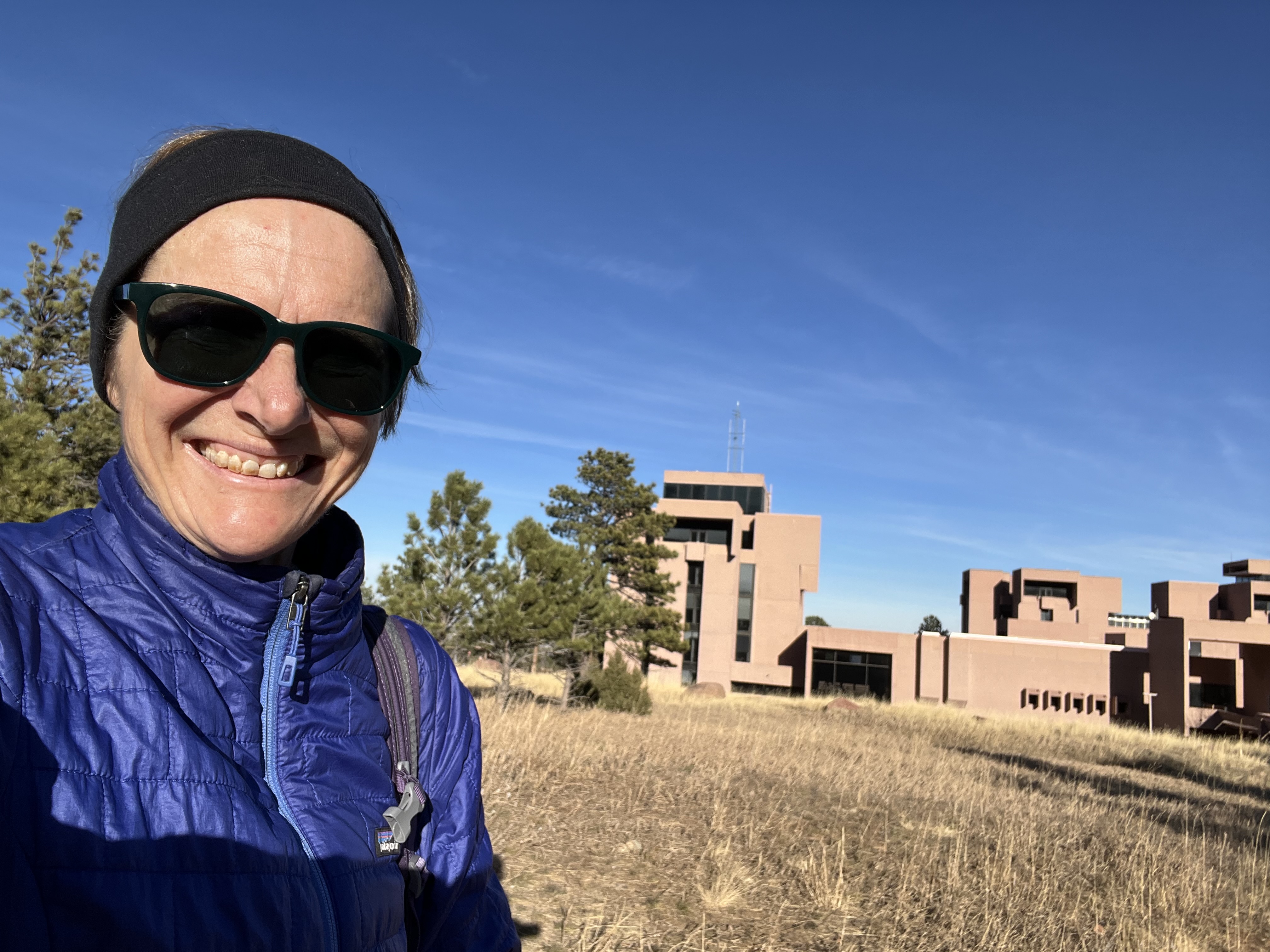
At the NCAR Mesa Lab in Boulder, Colorado on a sunny autumn day. The NCAR Mesa Lab has been slated to close with the dismantling of NCAR and the end of support for climate change research in the USA.

Deleting the word climate change from thousands of government websites will not erase the fact that we are in the midst of a global change that threatens every aspect of our civilization. Deleting climate data will not stop the Earth from getting warmer. Current federal policy around climate change is tantamount to covering your eyes and ears and singing at the top of your lungs as you pretend gravity doesn’t exist and step off a cliff.

In December, the current US government announced plans to dismantle the National Center for Atmospheric Research (NCAR). NCAR has long been the global flagship for climate research. Nearly every one of my colleagues in climate science has passed through there at one time or another – for conferences, seminars, summer research opportunities, and professional development. The NCAR Mesa Lab in Boulder, CO, has led the world in helping us understand the impacts of global warming.

Continue reading

Snapshots from another sinking city

My room on the 9th floor of the Sheraton had a view out across Sông Cần Thơ River that runs along south side of the city of Cần Thơ. After a morning at Cần Thơ University listening to students’ proposals to build climate change resilience, my brain felt tired but inspired. Foremost on my mind was this: What is it that gives you hope when your world is sinking? How do you plan for a future that might be underwater?

Sunset over the city of Cần Thơ in the Mekong Delta.
Continue reading

Preparing our students to build a new world

On the first day we talked about clouds. I needed a hook, and, given the abundance of different cloud types one can observe in the city of Dalat in a day (sometimes even in an hour), this seemed like a good place to start a short course on Tropical Meteorology and Climate Change. Who doesn’t like clouds? My first class in Vietnam was not unlike a first class in any of my other courses back home. I had the same objectives: I wanted to know my students. I wanted them to understand what we can expect from each other and from the course. I wanted them to feel excited for what we about to learn together.

With students at the University of Dalat, after we learned to sketch out patterns of global atmospheric circulation.
Continue reading

New decade, let’s make a new world

Listening to an episode of Science Friday recently about efforts to save corals made me cry. I guess you could say my emotions are sitting very close to the surface in the early days of this new decade. Like a lot of people, I usually spend some of this time around the turn of the calendar in reflection. While there is always pressure to celebrate and set goals and aspirations for making life better in the coming year – or coming decade – this particular New Year’s has left me much more contemplative than happy. We have so much work we need to do to sustain this planet and ourselves in the coming years, and the enormity of it all has hit me on an emotional level.

2019-01-06b.HydrurgaRocksSMALL

How do we find hope for a better world?

Continue reading

The stranger in town

In all stories, either a hero goes on a journey or a stranger comes to town. Sometimes the stranger sends the hero out on a journey. The stranger doesn’t have to be human. It can be a meteor hurtling toward earth, a tornado roaring across an open prairie, or a bear stalking a house. But it can be even more elusive than that. It could be an idea – one that flitters around until it settles on a host, then spreads like a virus.

Screen Shot 2018-02-20 at 7.04.23 AM

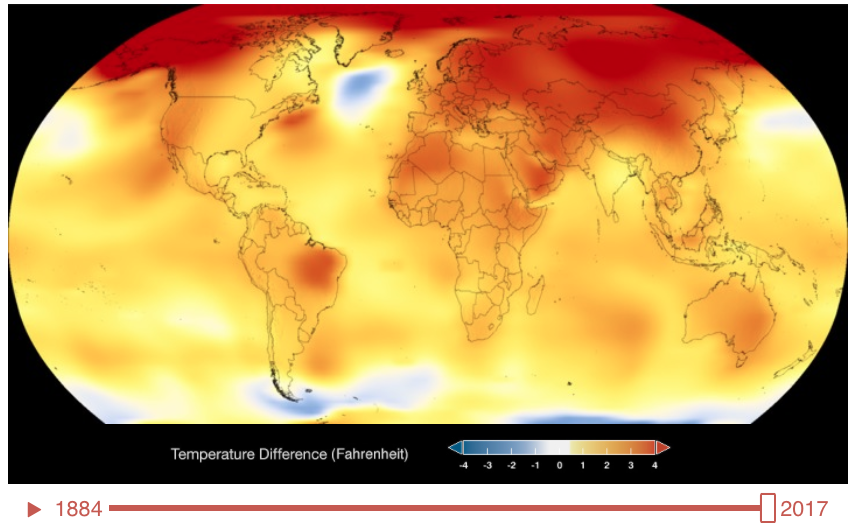
NASA’s Climate Time Machine lets you view global temperature anomalies going back to 1884. This snapshot shows anomalies in 2017.

We are all in the midst of a story right now – set on a global stage. The stranger is much more elusive than we could ever have thought. He flitters around the edge of our day-to-day consciousness. Some people see him clearly. Some deny that he could exist. He infiltrates our daily lives just beneath our consciousness, gradually unthreading the balance of the world we’ve built our lives on.

Continue reading

Antarctica Bound with Homeward Bound

I have some news I haven’t shared with too many people yet: One year from today, I will be crossing the Drake Passage on my way to the Antarctic Peninsula with a group of about 80 other women scientists from around the world. It will be the culmination of a year-long professional program for women in STEMM (science, technology, engineering, math and medicine) called Homeward Bound. How cool is that?

facebook-cover-photo

Homeward Bound is a major, not-for-profit initiative to equip 1000 women scientists over 10 years with skills in leadership and strategic decision-making in the context of global climate change science. The goals are not only to help women understand themselves as leaders, but also to help them understand how they can have a greater impact together – and then strategize ways to have an impact – to help nudge the world back onto a more sustainable path. My program starts online next month, and culminates in a 3-week expedition to Antarctica, sailing from Ushuaia, Argentina on December 31, 2018. My group will be the third cohort to go through the program. Continue reading

Summer Hike #7 – The Mindo Syllabus

IMG_6710

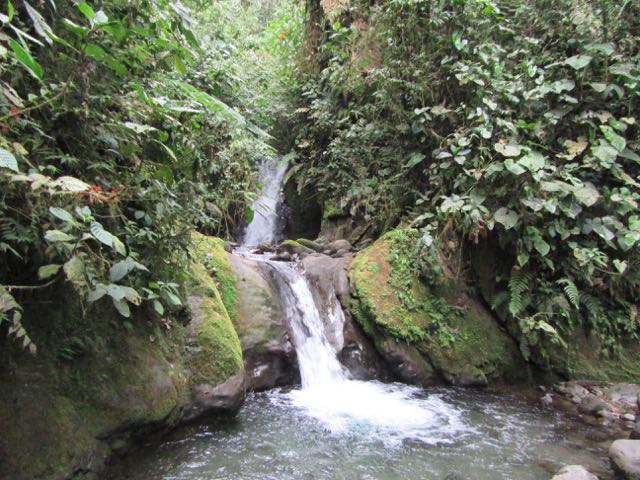
One of the ‘cascadas’, or waterfalls, along a hike through the cloudforest in Mindo.

For a cloud forest, it was unusually sunny. This is what happens when you visit in the dry season. There’s still plenty of water, you just won’t find your feet sliding so much on muddy trails. This is my first time in Mindo. I can imagine the wet season well enough, having traveled to other cloud forests, such as Podocarpus in Southern Ecuador and Monteverde in Costa Rica. Either way, these types of places, usually nestled in the shadows of rolling green mountains, make you feel as though you’ve stepped out of time. That’s one of the reasons Mindo was on our syllabus.

Continue reading

Ecuador: with my students

There are moments in your life when you think, “This is exactly where I’m meant to be right now.” That came into my mind early on in my 11-day journey through northern Ecuador with 17 students. Arriving in Ecuador for the second time in my life, I felt just as much fear and anticipation as I did the first time – but of a much different quality. Two and half years ago, when I arrived for the start of my Fulbright grant, I was simply terrified and totally alone in the middle of the night in a new country. This time, I was certainly not alone, and not unfamiliar with the country – but I felt responsible for the well-being of so many people.

My anxiety was compounded by the fact that our driver was not there waiting for us  when we emerged from customs around midnight at the Quito airport. But things got much easier after that initial flurry of phone calls, texts, and inquiries around the airport, and the bus pulled up at the curb for us about 45 minutes later to take us into the city.

IMG_6845

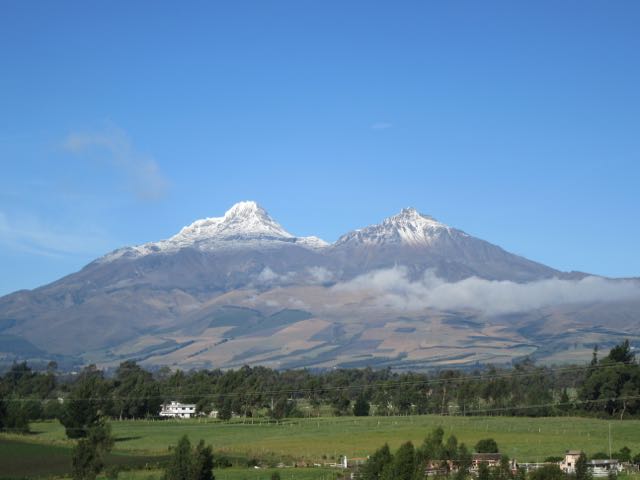
Spectacular day for great views in the Andes. Las Ilinizas: two snow-capped volcanic peaks south of Quito. Photo taken from the Pan-American highway.

Continue reading

Coming soon: The Return to Ecuador

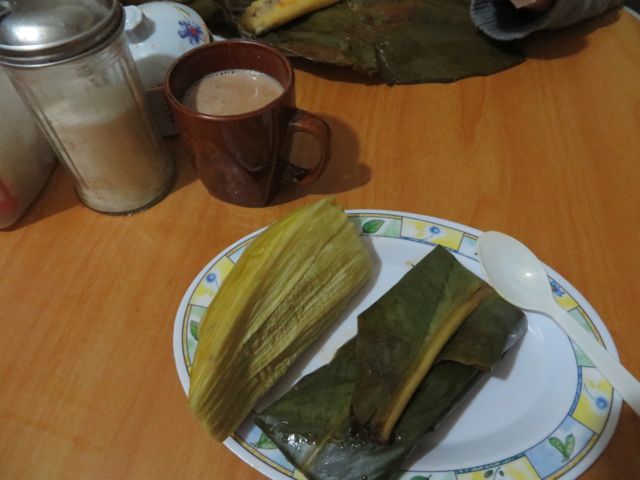
I’ve been craving humitas lately – those soft, cheesy, sweet cornmeal cakes steamed in a corn husk. I miss eating popcorn and tostado (corn nuts) with my soup. The popcorn here in the States – even the stuff I buy at the Farmer’s Market – just can’t compare with Ecuadorian popcorn. And I’d love to have a chirimoya. I saw them in Whole Foods market one day, shipped from somewhere in the tropics. I would have to shell out about $8 for a taste – as it should be – you pay for every bit of petroleum used to get that thing up here, to a place where no one has heard of a chirimoya. I wonder if Whole Foods made any profit on those. (Aren’t you tempted to google ‘chirimoya’ now?)

It’s been nearly two years since I returned home from Ecuador. Maybe it’s time for a visit?

2015_0210c

Humita, wrapped in a corn husk, and an Ecuadorian tamale – usually served with coffee or hot chocolate.

Continue reading

Finding Gratitude in a Demon-Haunted World

Carl Sagan wrote about the importance of understanding science (the habit of rational thought) in preserving our democracy, and said that “if we don’t practice these tough habits of thought, we cannot hope to solve the truly serious problems that face us – and we risk becoming a nation of suckers, a world of suckers, up for grabs by the next charlatan who saunters along” (from The Demon-Haunted World: Science as a Candle in the Dark, 1996).

img_5384

I was hoping for a photo here that would appear a bit scarier…But maybe these clownish jack-o-lanterns are perfectly appropriate.

Continue reading