I guess you could say it’s writer’s block. There’s certainly no shortage of things to write about. But the words are stuck in my throat. I have a dozen half-completed posts drafted over the summer. Half-formed ruminations on everything from travel to climate resilience to fascism. But nothing feels like the right thing to say.
I realize there is no ‘right’ thing to say at this time. I can only tell my own story. But that’s a challenge when it feels like you’re drowning in everyone else’s voices. When the news and social media feel like a firehose of voices – most of them angry or scared. I’ve questioned whether to add my own voice to the stream. Especially when I’ve found myself wanting to disengage from the stream so that I can hear the thoughts in my own head.
It’s not that I want to disengage from the world – it’s just that I’ve been feeling the need to engage more deeply with fewer things. Our minds (and bodies!) are not designed to filter information from a global firehose. We evolved in small communities, and try as we might, that is the level at which most of us can manage to focus our energy and our efforts.
The rate at which things – new stories, ideas, emotions – come our way in the modern world is overwhelming. This system of information onslaught does not give us the time to process. It doesn’t offer opportunity for reflection.
In an effort to stem the tide, I deleted social media apps from my phone and iPad. I can only access the firehose from a browser on my computer. I try to notice what makes me want to step into the onslaught and stop myself if I am reacting out of boredom or overwhelm. (Oddly, when I feel overwhelmed, I tend to do more scrolling through the feed of everyone else’s overwhelm, anger and fear!)
There are so many things I want to learn, so I’ve been diving into real, paper books.
I’ve been trying to understand the history of democracy and fascism in this country. So, I have made my way through Heather Cox Richardson’s Democracy Awakening, Tim Snyder’s On Tyranny, and most recently, Animal Farm by George Orwell, among others. I last read that one in 7th grade, not quite 40 years after it was first written. My takeaway from that book has evolved considerably in the past 40 or so years. And it amazes me how relevant and timely it is (read it – you will find the tyrannical pig, Napoleon, reminiscent of a certain modern politician). These books help me understand how the institutions we’ve relied on (and taken for granted) are falling apart in the United States – because of things that have building up for the past 100 years.
I’m also trying to understand racism and oppression of people of color and gender minorities. I’ve been on this path a long time because I realized many years ago that there was so much I didn’t learn in my history classes. (Did you learn about Juneteenth in high school? Or Stonewall? I’m guessing not – especially if you’re a Gen Xer or older. What about the Japanese internment, the Labor movement, the Civil Right’s movement? Those warranted a small paragraph, if any attention at all.) Like most people in this country, I learned US history through the lens of the accomplishments of white men. A couple of books that have helped counter my long-term indoctrination: Ibram X. Kendi’s How to be an Antiracist, Ijeoma Oluo’s So you want to talk about race, and Michael Bronki’s A Queer History of the United States For Young People (he also has one for older people, but this one came my way first).
And then there’s generative AI, what it means for higher education, climate change, and for the future of Earth and humanity, in general. I don’t even know what to begin to say about it yet. Other than ‘I’m learning.’ And nothing is as it seems anymore. Scholar Yuval Noah Harari has helped me out here with his books Sapiens and 21 Lessons for the 21st Century. I’ve also just started reading his book Nexus, about information networks.
Of course, I’m always continuing to learn about climate resilience. I realized awhile back that I am still figuring out what climate resilience really means, and that my understanding is evolving rapidly. I realized that I was not exactly sure yet what climate resilience looks like. There are so many different ways to build resilience, and it happens on so many scales, from individual to global. What does it look like at a community level, for example, versus a global level? So I’ve been trying to better understand that from a social perspective. I have about 20 books on my shelves that are helping me. For beginners, I’d recommend Katharine Hayhoe’s Saving Us and Britt Wray’s Generation Dread.
As much as the media and most internet influencers try to depict our world as simple, we live in a complex socio-political-environmental ecosystem. There are ripples to your actions that you could never imagine. I know I will never understand how it is all put together, but I know I can impact my own circle of influence – myself, my colleagues and friends, my university and community – by the actions I take everyday, and by continuing to learn and share as much as I can.
So, I have been in a period of radio silence, as I try to process what is happening in the world at a large scale, and how that impacts my own life, and the life we share together.
I don’t have any pithy insights to end this post. I only know that I need to stay out of the firehose of daily media and continue to dive deep into understanding. I need to trust that my words will come when I am ready — in whatever way they come. And that they will be uniquely my own.
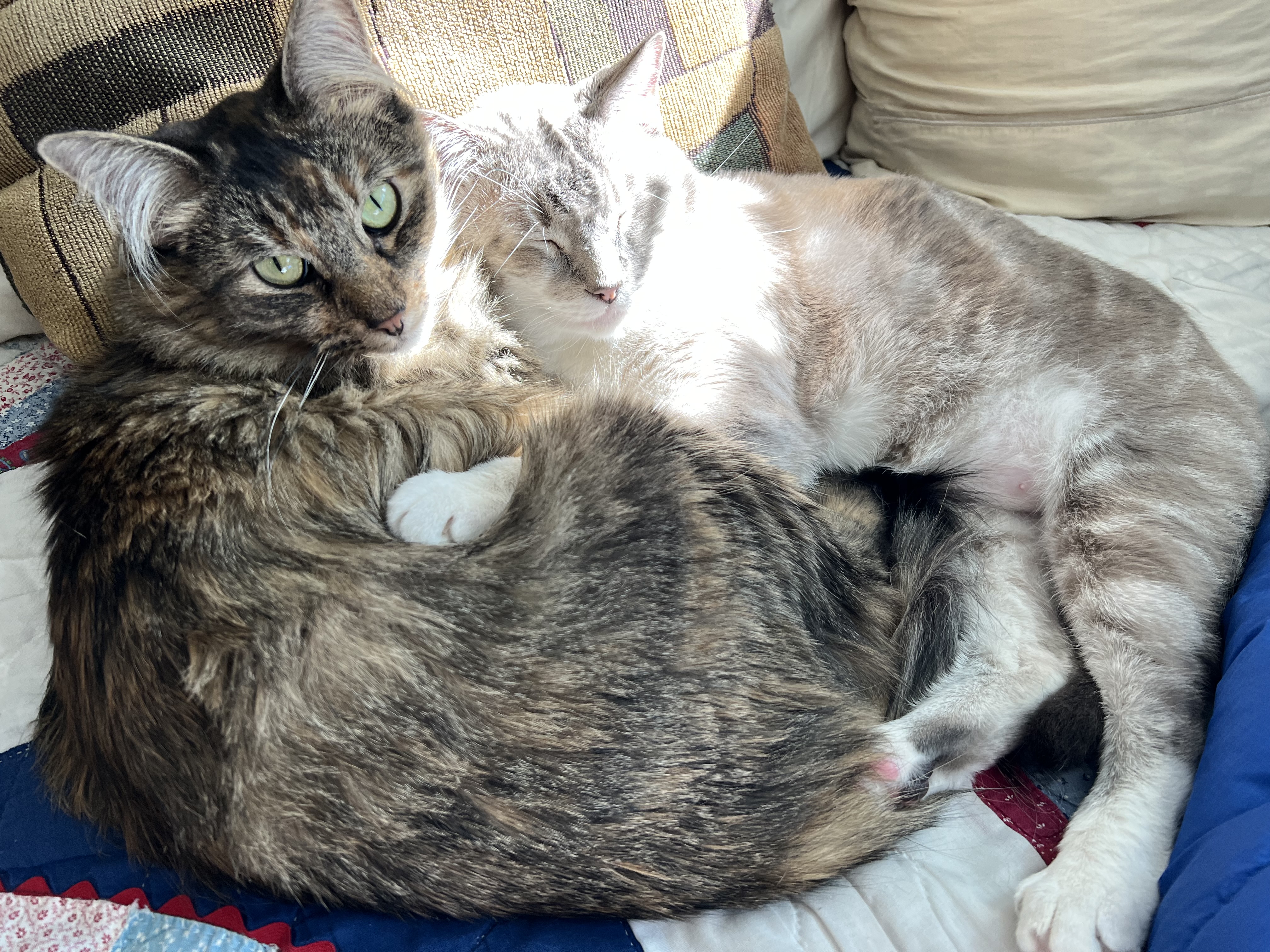
I’m writing this post on a six-year-old laptop that loads web pages like it’s 1995 and has me signed out of everything except the account I use to write this. I’m sitting at a window, watching squirrels and rabbits flutter around my front yard, as the breeze stirs the pine boughs. Two cats have walked across my keyboard and added their own thoughts on the state of the world – which mostly involves contentment with canned meat mush and a warm laps. I’m trying to follow their lead and sit in silence and feel the contentment of good food and a cozy space.
So I hope you can also find a way to protect your sanity by stepping out of the information firehose and sitting in silence for awhile. Or, at least sitting with a good book. (I’ll be sharing many of my books – that aren’t all dog-eared and annotated – in neighborhood Little Free Library boxes!)
 Northern Colorado Climo Prof
I’m sorry your life has become so negative. There’s a lot of love and beauty in the world.
LikeLike
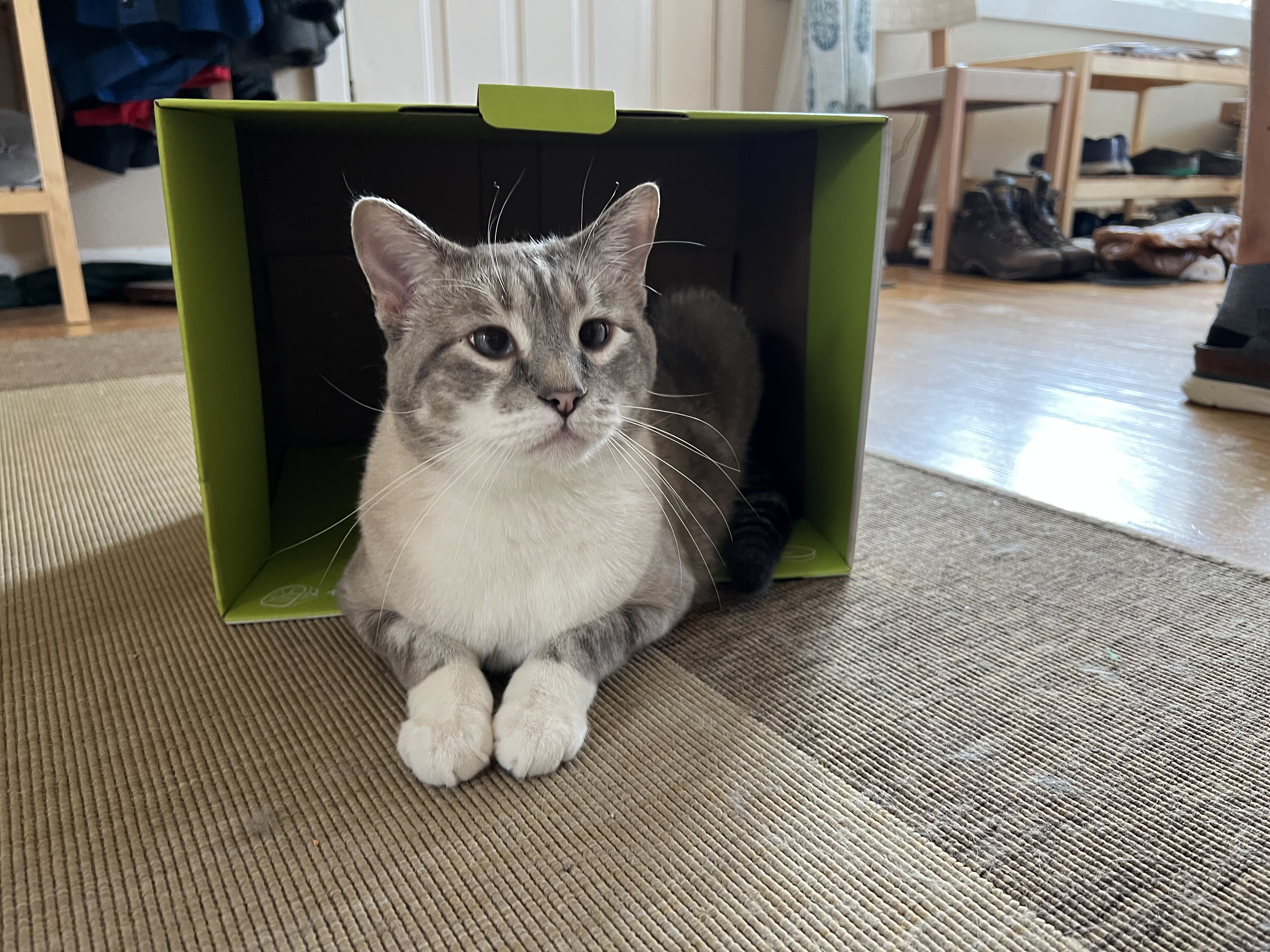
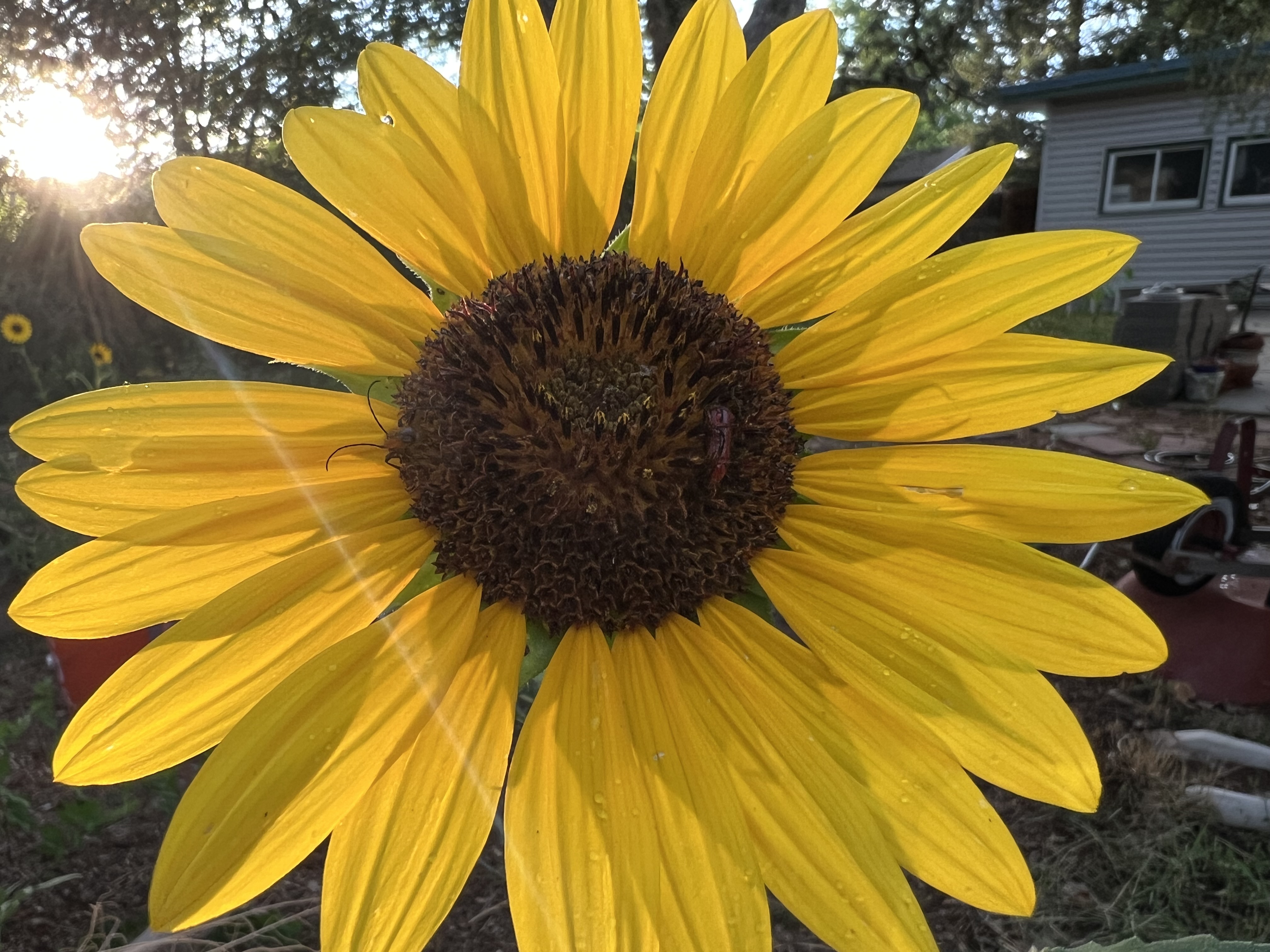
Hi Judy! Yes – that was my point! When we are caught in the media firehose each day, it’s hard to see that love and beauty, which is why it’s helpful to ‘hide out’ for awhile, away from the onslaught of daily news (why I show photos of cats and sunflowers 🙂 ). It’s also helpful to explore the complexity and nuance of everything that is happening in the world – which we can do by taking time in solitude, in nature, in the company of good friends (at least, that’s what helps me dive deep into understanding). The complexity of it all can be overwhelming, but it’s also what gives our lives meaning and substance – part of the joy is trying to figure it all out…the love and beauty and pain of it all. This is what our lives are made of, and it’s absolutely incredible!
And for anyone looking for positive messages, the two climate books I recommended are really helpful (Saving Us and Generation Dread).
LikeLike