The desert always help me step deep back in time. I love that I can walk in a place that has been shaped by wind and water and deep earth processes more than by life itself. These landscapes were sculpted long before there was even a whisper of human evolution in the global gene pool.
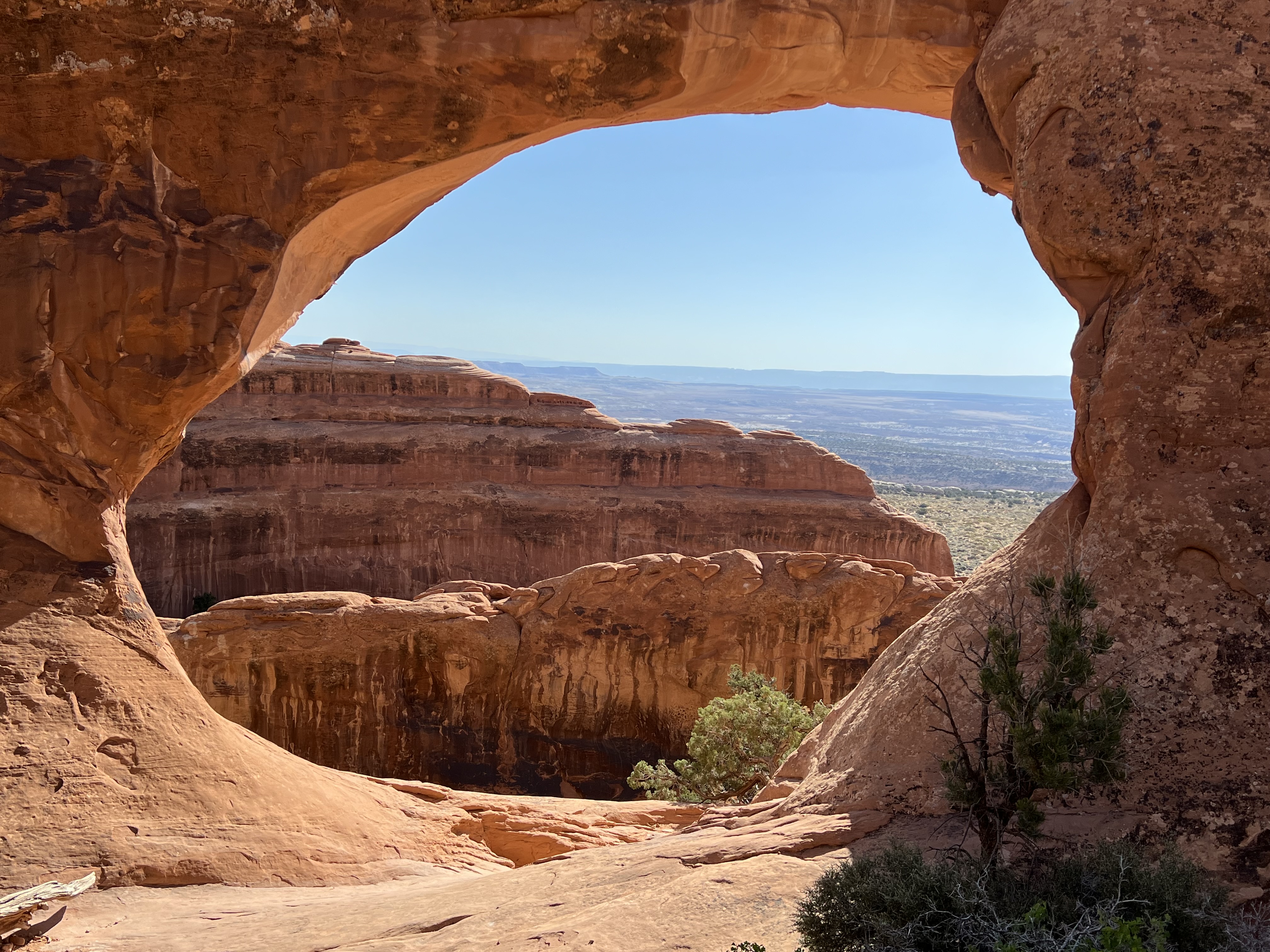
Arches National Park in southwestern Utah in late May is sunshine and blue sky and bright red rocks that cast long shadows in the mornings and evenings. It’s also small white puffy clouds and heat that bakes you from all directions. We are in the park before 7am and out on the trail not much later, so we can be done before running the risk of evaporating right off the sand and rock.
As I step along sandstone and scramble up the sides of rocky fins protruding from the desert floor, or pass beneath an arch to behold a view, I remember that I am walking on 300 million year old sea floor. These are the remnants of a shallow inland sea that existed in this place long before dinosaurs walked the Earth. Many of the rocks are what remains from dunes that hugged an ancient coastline and, eventually, after the ocean retreated, crept over thick beds of salt before cementing into place. Ultimately, the weight of these sandstone rocks liquefied the salt underneath, which squeezed upward to create bulges of sandstone that now form the arches.

I am in awe at how much time it has taken to build the landscape we see. Complex interactions between the earth, air, and water have sculpted all of the most fantastic places on earth, and they are still at work.

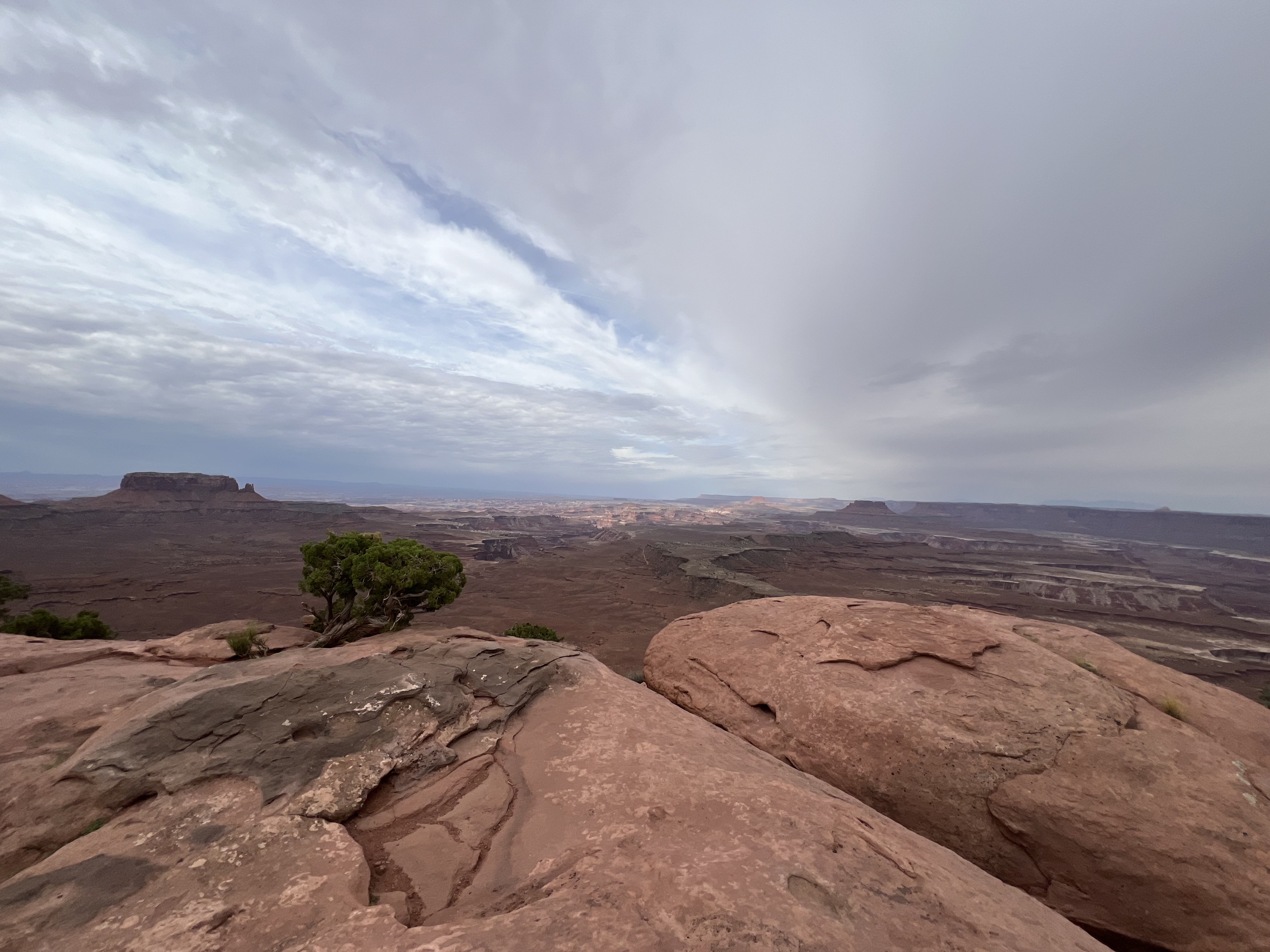
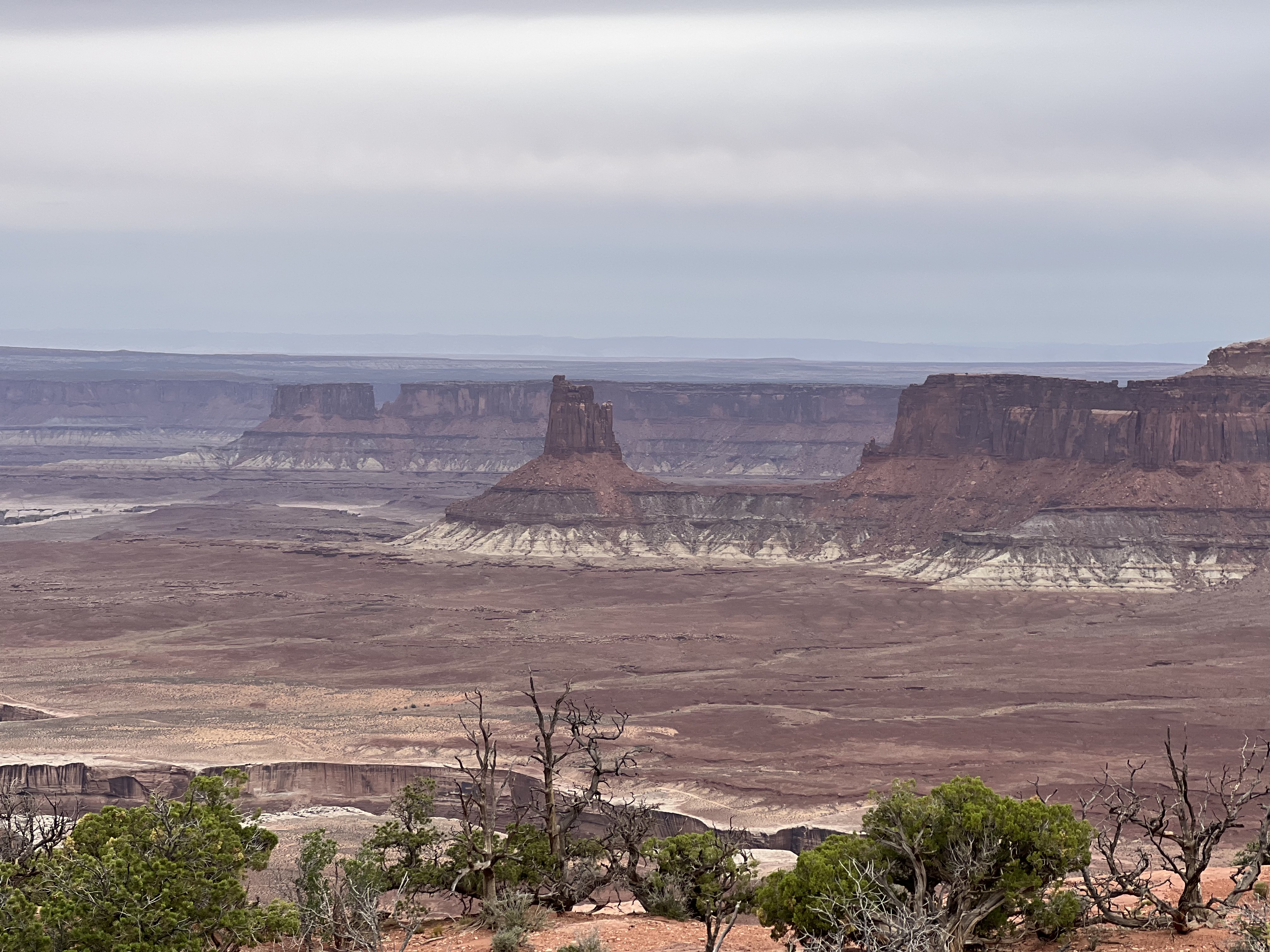
Canyonlands National Park lies less than 30 miles to the east of Arches, as the crow flies. This place is an open book on the geologic history of the southwestern US. Let your imagination take you back a few hundred million years and you might see wind and rain lashing against steep mountain slopes. Sediment-laden streams and rivers ripple into a large basin, where deposits build up layer upon layer, like a giant Earthen lasagna.
Then, about 50 million years ago, the entire basin, loaded with layers of rock and sediment, begins to rise up. As it does so, the Green River and the Colorado River slice deep into that lasagna and create the canyons we see today. We read those layers, and the fossils buried within, to recreate a history of the United States that goes back long before humans walked the planet.
I developed this fascination with the history of Earth and its climate when I was a teen. It’s always been comforting to keep a long term planetary perspective somewhere near the forefront of my mind. It helps to remember that all we have now, everything that we do, everything that is happening in the world, is building on what has come before, and will cement the foundation for what comes next.
Every molecule in my body has been recycled again and again through air, water, and rock, and though other lifeforms that have absorbed those things. Physically, we are inseparable from this desert. We are made of the same elements, coming together in a new form. The physical science seems so simple. “We are made of star-stuff,” wrote Carl Sagan.
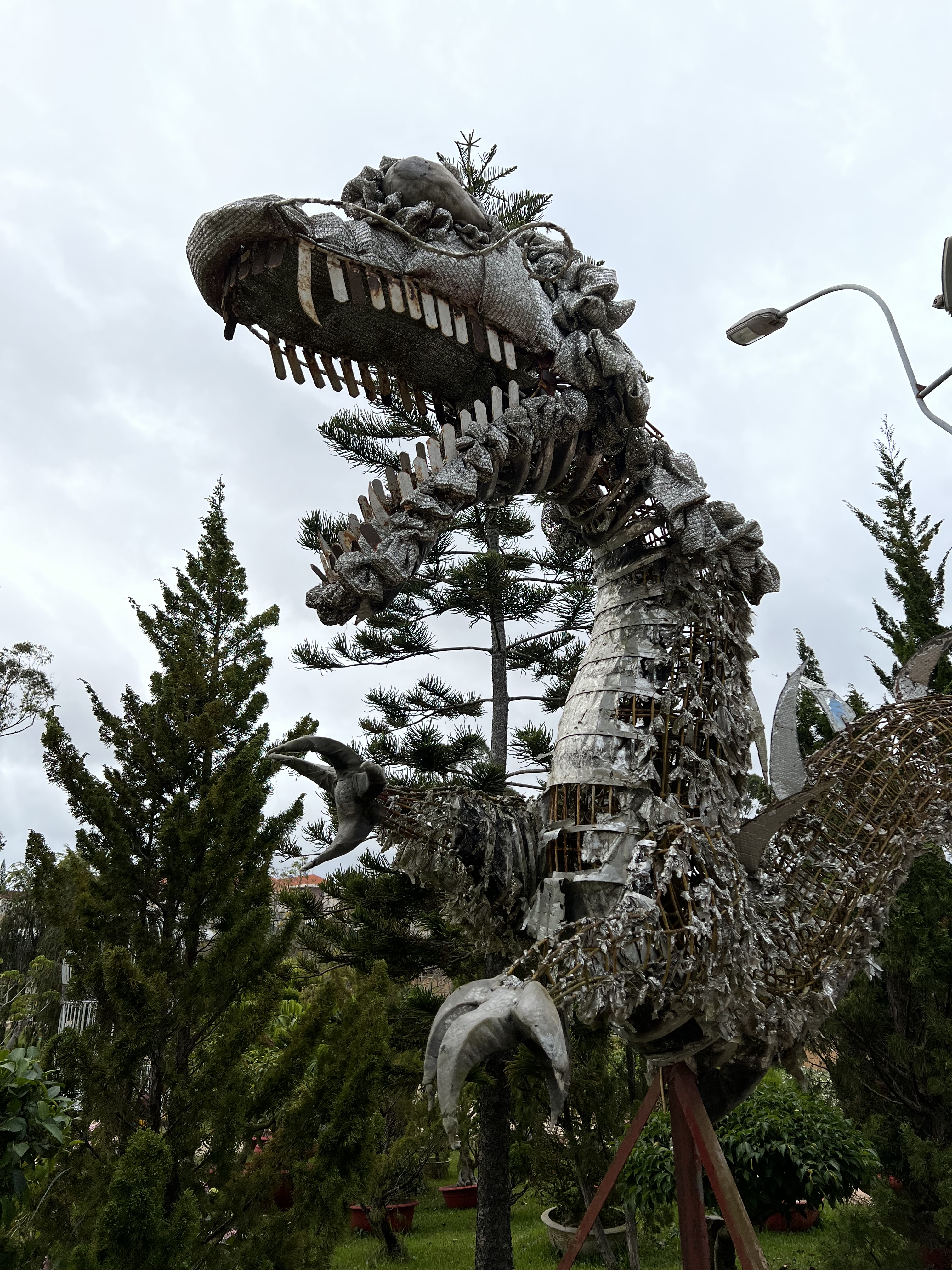
During the time that the dinosaurs walked the earth, from around 200 million years ago until their final demise 65 million years ago, this landscape evolved from desert and dunes to shallow seas, then low-lying flood plains, dotted with lakes and wetlands and swampy forests. I imagine myself walking in the footsteps of dinosaurs. I imagine some of the molecules in my body are the same that rode along this way in the body of some creature during that era. Maybe it was a dinosaur. Maybe it was a cockroach. In that sense, this is not the first time I have walked this path.
I find myself wondering especially about the mass extinction at the end of the Cretaceous, when the world changed in an instant as a massive meteorite slammed into what is now the tip of the Yucatan Peninsula. It’s estimated that more than 75% of all species became extinct in that event and in the global ecosystem chaos that followed. That was the last great extinction on Earth.
Until now.
Maybe we’re not in a ‘great’ extinction yet. The jury is still out. But data on wildlife populations and diversity suggests we are well on our way. A report by the World Wildlife Federation suggests that 60% of birds, fish, mammals, and reptiles have been wiped out since 1970. It might be as high as 73% (Living Planet Index). We also really have no idea about the impact of the human world on smaller species, such as insects. Research suggests we might be losing species faster than we discover them.
I tell you this not to depress you, but to wake you up. Maybe, the one good thing about being human in a time when rapid change (e.g., mass extinction, climate change, ecosystem collapse, as well as various socio-economic and political crises) is that our consciousness allows us to recognize this time for what it is. The dinosaurs were blind-sided by long term climate change and then a meteorite impact. They had no idea what hit them (I’m assuming). Mass extinction was inevitable.
But things are different for us. We have awareness and agency. We have the ability to work with people around the world. We have a good understanding of how the world works physically, and what changes we need to make our civilization sustainable. We also know how to appreciate the world. Whether or not everyone understands what is happening to our planet on a very large scale, there is a general appreciation and love for the beauty of natural places, such as Arches or Canyonlands.
And that is where our power lies. We have built this civilization by creating and sharing stories that bind people together in action. But our stories need to shift as the world evolves. We need new stories that bind us together in the world as it is now – stories that help people understand their unique relationship with the earth, and unique relationships with each other. Stories that support the development of policies that recognize human rights and dignity, and that give a voice to those who have been silenced. Stories that promote compassion, empathy, and collaboration as we work to rebuild our world in a way that sustains our civilization and our natural environment for generations to come.
What role do you play in re-envisioning our world? What stories can you help share that promote understanding, or compassion and collaboration?
I’m still learning how to do this myself. But as I move into the latter stages of my career as a professor and climate scientist, I know that this work of finding ways to help people understand what to protect, how to connect, and how to live more sustainability, is the most important work I can do.
Resources:
- You can check out prehistoric maps of the earth at this website.
- Check out recent satellite images of Arches National Park at NASA.
 Northern Colorado Climo Prof